Indian Simulator Blog
Indian Simulator Levels Guide
A practical guide to all five Indian Simulator levels, including what each level teaches and how to approach it.
7 min read · Published July 19, 2026
The five-level structure
Indian Simulator is organized as five short arcade levels. You can play them individually from the level grid, or treat them as one continuous fictional city run from arrival to departure.
The first two levels are free. They are important because they teach the core language of the game: movement, camera control, score pressure, the HYGIENE meter, and quick restarts.
Level 1: Survive the Streets
Survive the Streets is the best starting point. The player moves through a stylized street scene while avoiding hazards and collecting score. It is open enough to let you practice movement, but busy enough to show why awareness matters.
The main lesson is spacing. Do not stare only at the score. Watch the path ahead, keep the HYGIENE meter visible in your peripheral vision, and use sprinting only when you have enough room to recover.
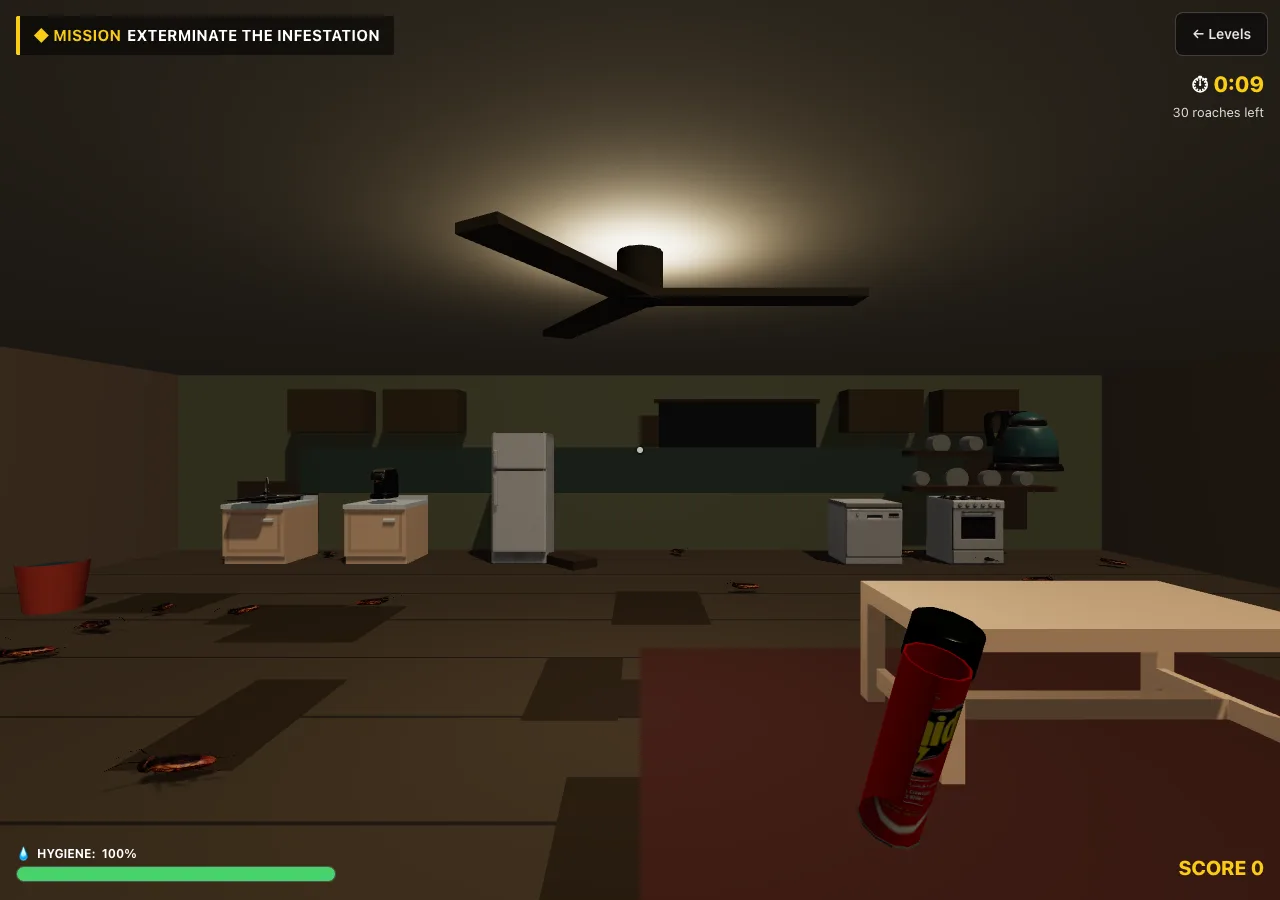
Level 2: Clear the Apartment
Clear the Apartment changes the game from street survival into a focused cleanup challenge. The level is tighter, and the goal is easier to understand at a glance: find the mess, clean it up, and avoid losing the run before the job is done.
This level teaches interaction timing. If you rush around without reading prompts, you waste time. If you move too slowly, the meter keeps draining. The best rhythm is to scan the room, move directly to the next objective, and interact only when the prompt is active.
Level 3: River Crossing
River Crossing is a fictional obstacle route built around timing and path choice. It asks the player to read movement patterns rather than simply run forward. The level rewards patience more than panic.
Treat it like a crossing puzzle with arcade pressure. Look ahead, decide where you want to be two seconds from now, and commit to the safest route instead of reacting at the last moment.
Level 4: Festival Rush
Festival Rush raises the pace. The scene is busier, the path changes quickly, and success depends on moving with purpose. The level is still fictional and arcade-focused, but it feels more crowded than the earlier challenges.
The key is not to overcorrect. Small camera adjustments and steady movement usually work better than sharp turns. Keep your route simple, and avoid chasing every score opportunity if it puts the run at risk.
Level 5: Night Train Ride
Night Train Ride is the finale. It uses a more constrained scene and asks the player to respond to prompts while the timer keeps pressure on the run. It is less about open exploration and more about staying calm inside a narrow space.
The best approach is to keep your eyes on the objective prompts and avoid unnecessary movement. In the train level, control matters more than speed.